
"AI brain rot" is slang for the worry that leaning on AI dulls your skills and attention. Research on automation shows that skills you stop using can fade, and early studies of AI in learning point the same way. None of the studies below followed working developers using agents for months. Keeping some work hands-on is the practical answer.
What people mean by AI brain rot
The phrase is slang, but it names a real worry: after months of letting agents write the code, can you still write it yourself? Do you still understand the system well enough to spot when an agent is wrong?
It is not a medical term, and none of the research below shows that using AI damages your brain. The useful question is narrower: which skills fade when a machine does the work, and what keeps them in shape.
This guide is about skills over months. Feeling drained at the end of a day of supervising agents is a separate problem, covered in AI fatigue for developers: why it happens and what helps.
What automation research shows
People worried about this long before coding agents. Pilots, plant operators and control-room staff have worked alongside automation for decades, and researchers have studied what happens to their skills.
Skills you stop using fade
In "Ironies of Automation" (1983), Lisanne Bainbridge wrote that "physical skills deteriorate when they are not used". She added that recalling knowledge from long-term memory depends on how often you use it. Her conclusion was uncomfortable: a formerly experienced operator who has been monitoring an automated process may now be an inexperienced one, and when a takeover is needed, something is likely to be wrong already.
One possibility she offered was simple. Let operators use hands-on control for a short period in each shift, or give them simulator practice if that is not possible.
The thinking can fade before the hands
A 2014 study in Human Factors by Casner, Geven, Recker and Schooler asked 16 airline pilots to fly routine and nonroutine scenarios in a Boeing 747-400 simulator. Their instrument scanning and manual control skills were mostly intact, even when rarely practised. The trouble came with the cognitive tasks of manual flight: tracking the aircraft's position without a map display, deciding which navigation steps come next, and recognising instrument failures. There the researchers saw "more frequent and significant problems".
Those problems were associated with how often pilots let their minds wander while the automation flew. The authors suggest that keeping these cognitive skills may depend on staying actively engaged in supervising the automation.
For developers this is a useful warning, though the study was about pilots. Typing code may be the last thing to go. Knowing where things are in the system and what should happen next may go sooner.
Trust drifts into complacency
Parasuraman and Manzey reviewed studies of automation complacency and automation bias in 2010. They found complacency occurs when several tasks compete for attention, is found in both novices and experts, and cannot be overcome with simple practice. Automation bias, trusting an imperfect aid, led to errors of omission and commission, and could not be prevented by training or instructions.
The review was about operators of automated systems, not developers. Still, approving an agent's change while juggling three other sessions is a similar kind of split attention.
What studies of AI and learning show
Producing an answer yourself helps you remember it
The generation effect is a well-studied finding in memory research: people remember information better when they produce it than when they read it. A 2007 meta-analysis by Bertsch and colleagues in Memory and Cognition covered 445 effect sizes from 86 studies and found an effect of .40, "a benefit of almost half a standard deviation". Those were memory experiments, not programming. The lesson carries over loosely: reading an agent's code is the reading condition.
Handing work to a tool is called cognitive offloading. A 2016 review by Risko and Gilbert defines it as using physical action to change the information processing a task needs, so as to reduce cognitive demand. The review notes how common offloading is. One of the questions it asks is what the cognitive consequences of offloading are.
Students who leaned on AI did worse on their own
A field experiment published in PNAS in 2025 by Bastani and colleagues gave nearly a thousand high school maths students access to GPT-4 tutors. While they had access, grades improved by 48% with a standard chat interface and by 127% with a version designed to protect learning. When access was taken away, students who had used the standard version did 17% worse than students who never had access. The safeguarded tutor largely removed that harm. The authors say students without guardrails used the AI as a "crutch".
Novices can end up with an illusion of competence
At ICER 2024, James Prather and colleagues observed 21 novice programmers solving a problem with generative AI tools, using observation, interviews and eye tracking. Twenty of 21 finished. Students who accelerated used the tools to write code they meant to write and ignored bad suggestions. Students who struggled often thought they performed better than they did, and "finished with an illusion of competence".
The EEG study you may have seen
A preprint led by Nataliya Kosmyna at the MIT Media Lab, first posted in 2025, had 54 people write essays across three sessions with a language model, a search engine or no tools. On the study's EEG measure of brain connectivity, the language model group showed the weakest connectivity. Those participants also reported the lowest sense of ownership of their essays and "struggled to accurately quote their own work". It is a preprint, and it is about essays rather than code. Lower engagement during a task is not damage.
What is shown and what is not
What the research supports:
- Skills that go unused can fade, and the thinking parts may fade before the hands-on parts.
- Complacency shows up when attention is split, and simple practice does not overcome it.
- Students who used an unguarded AI tutor did worse once it was taken away, and struggling novices overrated their own performance.
What it does not show:
- That coding agents erode the skills of experienced developers. None of these studies tested that.
- Any lasting change to the brain.
- How much agent use is too much. None of these studies gives a number.
How to stay sharp while using agents
Keep some work hands-on
Bainbridge's suggestion translates well: a short stretch of manual control each shift.
- Write the hardest part of a feature yourself, and give the agent the routine parts.
- Pick one small task a week to do without an agent, start to finish.
- When something breaks, try to find the cause before asking an agent to.
Think first, then compare
The generation effect suggests a cheap habit. Produce your own answer before reading the agent's.
- Before you send a prompt, write down how you would approach it.
- Ask for a plan before code, and judge the plan against yours. See Claude Code Plan Mode: how to use it and approve plans.
- When learning a new library or language, ask the agent for hints rather than full solutions.
Read changes like a reviewer
Approving a diff without reading it trains you to approve diffs.
- Explain each change in a sentence before you accept it. If you cannot, read it again or ask.
- Do your most careful reviews when you are not juggling other sessions.
- Keep your own picture of the system: where things live and what should happen next.
Where Orbtile fits
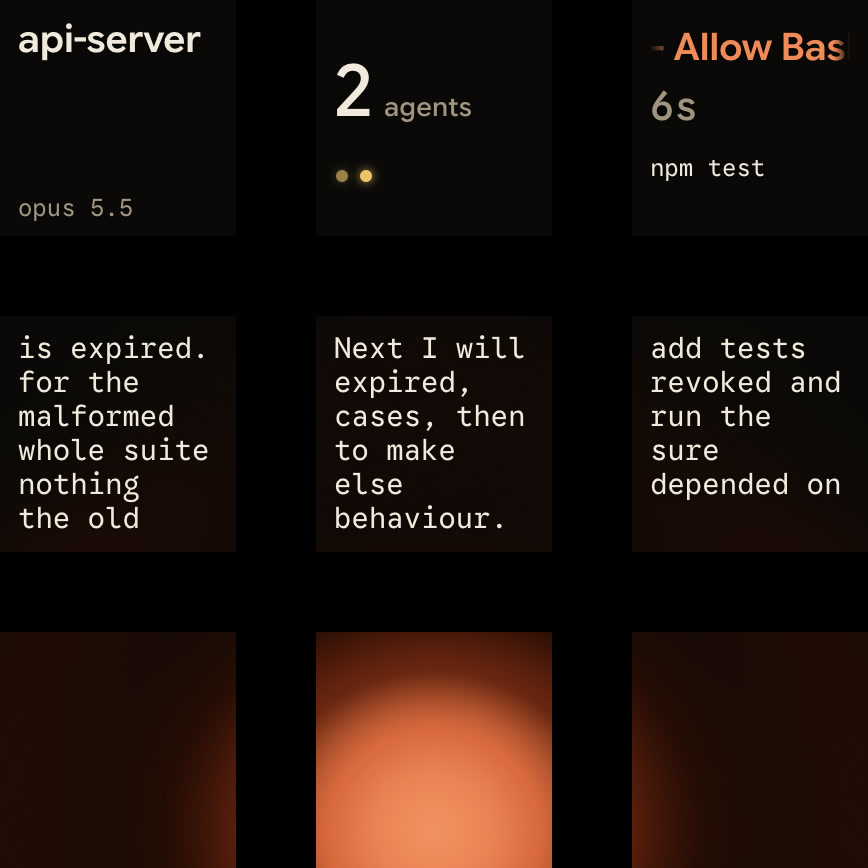
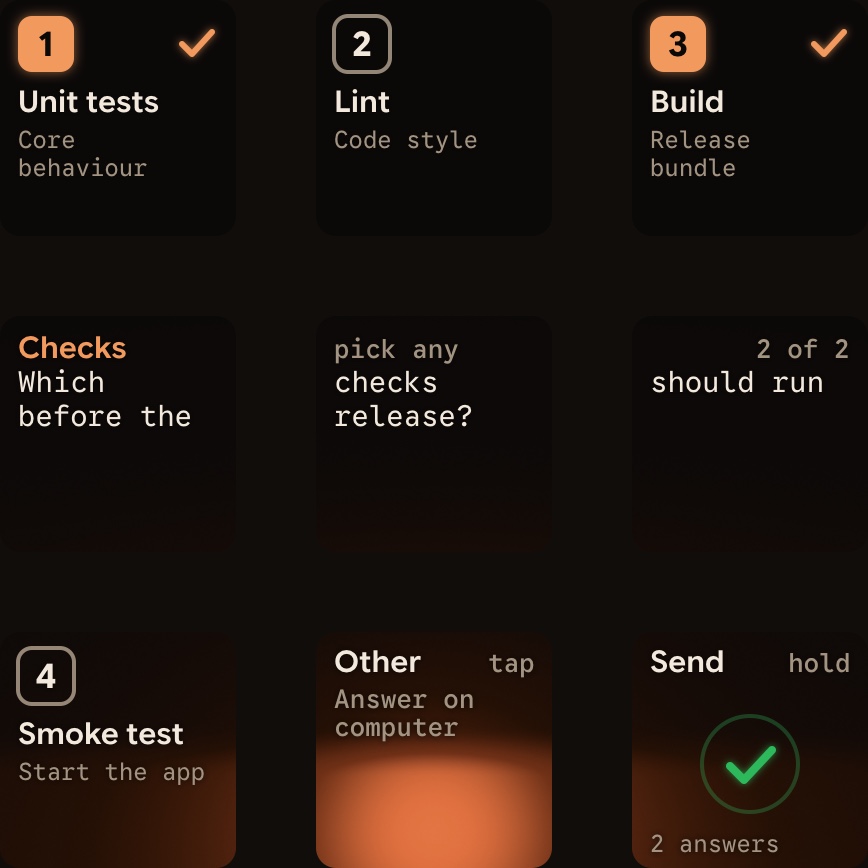
Staying sharp starts with knowing which agent is waiting before you answer. Orbtile shows each coding-agent session as a key on the Logitech MX Creative Keypad, or a tile on an iPhone or Android phone with Orbtile Mobile, with its name and state, and the latest words for supported agents. When a local Claude Code session asks for permission, its key glows, and holding it opens Focus mode. Press Deny on key 7, or hold Allow on key 9 for 0.6 seconds while its ring fills. Releasing earlier does nothing. Orbtile does not read the change for you. That part stays yours. For questions with options, see Know when Claude Code asks you a question or wants a plan approved.
FAQ
Is AI brain rot real?
It is slang, not a diagnosis. Research does show that unused skills can fade, and that students who used an AI tutor without guardrails did worse once access was taken away. None of these studies tested experienced developers using coding agents over months.
Can using AI coding agents damage your brain?
None of the studies here shows that. One preprint with 54 essay writers found the weakest brain connectivity, its EEG measure of engagement while writing, in the group using a language model. It is a small, unreviewed study of essays, and lower engagement is not damage.
How often should I code without an agent?
None of these studies gives a number. Automation research suggests regular hands-on practice, so a small task each week done without an agent, plus writing the hardest parts yourself, is a reasonable start.
Does Orbtile decide anything for me?
No. Orbtile shows which session is waiting. You still read the request and decide, and Allow needs a deliberate 0.6-second hold.